

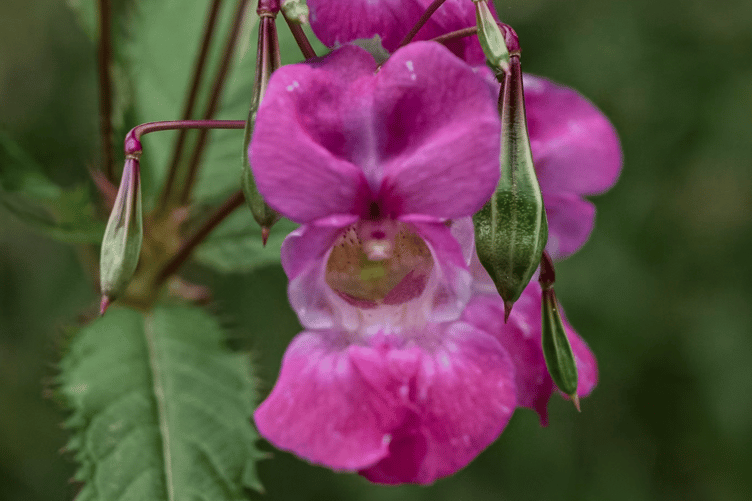
DARTMOOR National Park Authority is calling on volunteers to take part in a series of balsam-pulling sessions this summer as part of ongoing efforts to tackle invasive non-native plant species across the moor.
The authority says invasive species pose a significant threat to Dartmoor’s wildlife and habitats by outcompeting native plants, disrupting ecosystems and reducing biodiversity. Once established, they can also be extremely costly and difficult to control.
Officials are focusing their efforts on two of the most damaging species: Himalayan balsam and American skunk cabbage.
Both are known to spread rapidly and dominate riverbanks and wetland areas, limiting access to light, space, oxygen and nutrients for native flora.


This, in turn, impacts insects and animals including dragonflies, birds and otters.
Since 2019, conservation workdays have brought together volunteers to help remove invasive plants from woodland areas and stretches of rivers, streams, leats and ditches.
Work has centred on key locations including Princetown, South Brent and Lustleigh, with a particular focus on watercourses where the plants are most established.
The authority says tackling the problem at source is crucial.
By working in the headwaters of rivers on Dartmoor, volunteers can help prevent the spread downstream, improving habitats across wider parts of Devon.
The long-term aim is to restore rivers and wetlands as healthy environments for both wildlife and people.
Himalayan balsam, recognisable by its pink flowers and explosive seed pods, is a particular concern.
Volunteers are encouraged to pull the plants before they seed, preventing further spread along waterways.
The authority is encouraging people of all ages and abilities to get involved in upcoming conservation sessions, describing them as a practical way to make a tangible difference to the landscape.
For more information, and to register interest in taking part, contact [email protected]
Comments
This article has no comments yet. Be the first to leave a comment.