
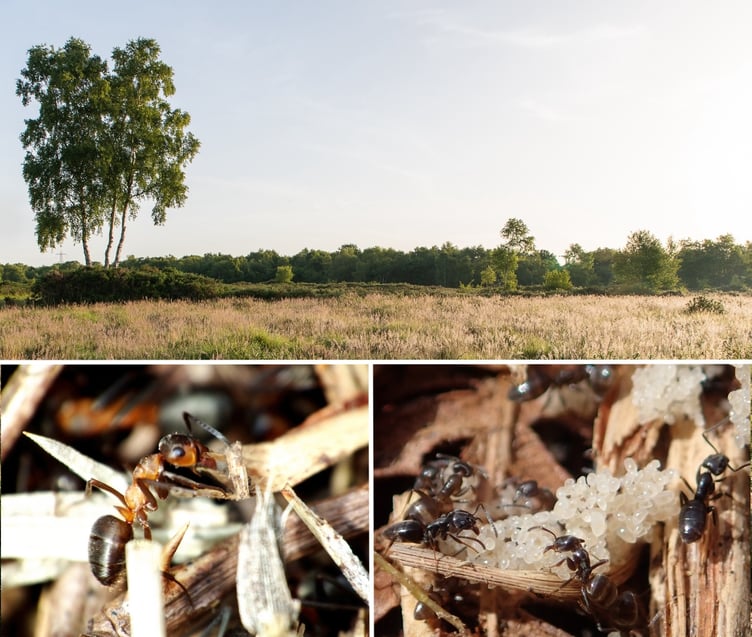
A project to improve the habitats of two rare ant species in heathlands near Bovey Tracey has been granted £212,000 in government funding.
The Chudleigh Knighton Heath nature reserve is the only place in England known to have a population of the Narrow-headed Ant – while the nearby Bovey Heathfield reserve is home to the Erratic Ant, a nationally scarce species.
The Narrow-headed Ant’s name is self-explanatory. The species is also found at a few sites in Scotland - one recent discovery on the Royal estate at Balmoral made national headlines.
The Erratic Ant’s name was inspired by its high-energy foraging behaviour, which sees it scamper with meandering and unpredictable movements.
The Devon Wildlife Trust will be working with Buglife – aka the Invertebrate Conservation Trust – to make sure the conditions at both habitats are as good as possible for their narrow-headed and erratic occupants, with the aim of boosting their numbers.
The project will also create the right habitats for the ants in other heathland reserves so that both species can be introduced at those sites.
As well as safeguarding the ants, this work will benefit other heathland wildlife including birds such as nightjars and Dartford warblers, butterflies such as the silver-studded blue, and reptiles such as adders and slow worms.
Both ant species have seen dramatic national and local declines in their numbers over the last 150 years. Their favoured heathland homes have been lost because of changing agricultural land use, the planting of conifer plantations, building and road developments, and poor management.
But the chair of Natural England, Tony Juniper, said previous conservation projects have proved that declining species can be saved.
He said: "For decades Natural England's vital species recovery work has revealed how even the rarest of the rare can be brought back from the brink. The red kite, lady's slipper orchid, pool frog, beaver and large blue butterfly are among examples that demonstrate the many opportunities at hand and what can be achieved for nature and wider society.



“We know that good science and effective partnerships can help restore species to favourable status, and this funding will enable us to support many initiatives to help halt and reverse the decline of our wonderful wildlife."
The ant conservation work will take place over three years, in three stages.
First, the ants’ existing habitats will be secured through careful management work. The aim is to double the number of nests at Chudleigh Knighton Heath from 200 to more than 400.
Next, suitable habitats will be created for them at other heathland reserves including those at Ideford Common and Teigngrace Meadow. Introducing ants from both species into these new locations will reduce their vulnerability.
The third stage will be the monitoring of the existing and new colonies.
As part of this project, Species Recovery Plans will be produced for the Narrow-headed and Erratic Ants to guide conservation work across South Devon and at other lowland heaths in Dorset, Surrey and Hampshire.
Comments
We've recently changed our login process. If you have an account for commenting, you will need to re-register on the login window.
This article has no comments yet. Be the first to leave a comment.