
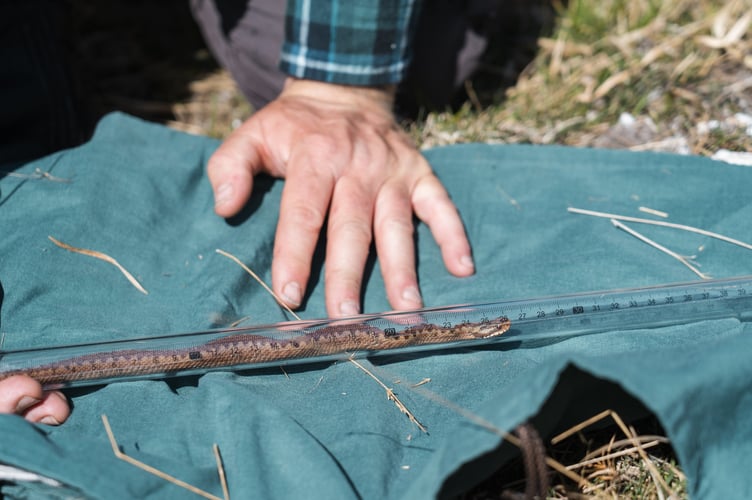
A GROUND-BREAKING study of adders in Devon has revealed Haldon Forest could become a regional stronghold for threatened native snake.
The pioneering study at Haldon Forest has provided new evidence that the forest could become an important location for adders which are one of the UK’s most threatened native reptiles.
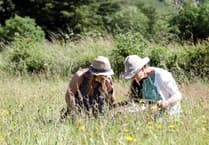
The first year of a long-term research project, believed to be the first in Devon to track adders using small radio tags, has provided valuable insights into how the snakes use the landscape and what they need to thrive.
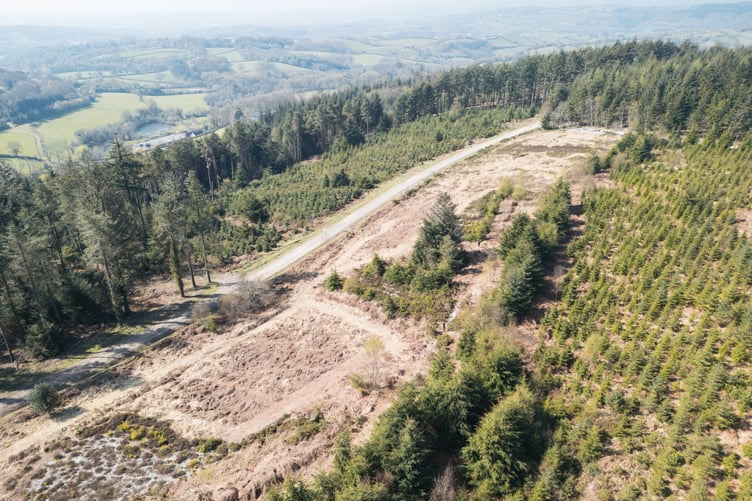
Researchers found adders strongly favour connected areas of open habitat, including heathland, recently replanted woodland, and forest edges.
The study also showed that many snakes stay in surprisingly small territories, highlighting the importance of finding and protecting key habitat areas.
The findings will help Forestry England shape future habitat management at Haldon Forest and support efforts to safeguard the species.
Adders are one of the UK’s three native snake species and the country's only venomous snake.
‘Despite their protected status, they have declined significantly across Britain and could disappear from many areas without action to reverse their decline.
Often misunderstood, adders face growing pressures from habitat loss, fragmented populations, predation by birds and mammals, and disturbance from people and dogs.
While there have been records of adders at Haldon Forest since it was established in the 1920s, little has been known about the size, distribution and behaviour of the local population.
Haldon’s mix of heathland, open spaces, woodland of different ages, and extensive areas managed as a single landscape creates a unique opportunity to support a thriving adder population.
Forestry England believes the forest has the potential to become one of the most important sites for adders in the region.
This study has provided the first detailed baseline data about Haldon’s adders and identified two important findings.
Ten adders tagged in the study consistently used open habitats, including heathland, recently replanted forestry areas, and woodland edges, such as the sides of forest roads.
These habitats already occur throughout Haldon Forest, but the research highlights the importance of connecting them so adders can move safely and breed.
Aaron Boughtflower, Forestry England ecologist said: ‘Adders are a fascinating and beautiful part of our native wildlife.
‘They’re an important part of healthy ecosystems, but across the country they're facing an uncertain future.
‘We're lucky to have a breeding adder population at Haldon Forest but, until now, we’ve known relatively little about how they use the landscape.
‘This research has given us incredibly detailed information that will help us make better decisions for both adders and the wider forest.
‘We can use the evidence to inform our habitat restoration, improve habitat links across the forest, and support the long-term recovery of this important population.
‘This is only the beginning of a long-term programme of work. As we continue to learn more, we'll keep adapting how we care for Haldon Forest and help more people appreciate these remarkable animals.'
Forestry England has secured funding to continue the research over the next three years.
The expanded programme will track adders in additional areas of Haldon Forest, helping build a larger evidence base to guide habitat management and population recovery.
Comments
This article has no comments yet. Be the first to leave a comment.