

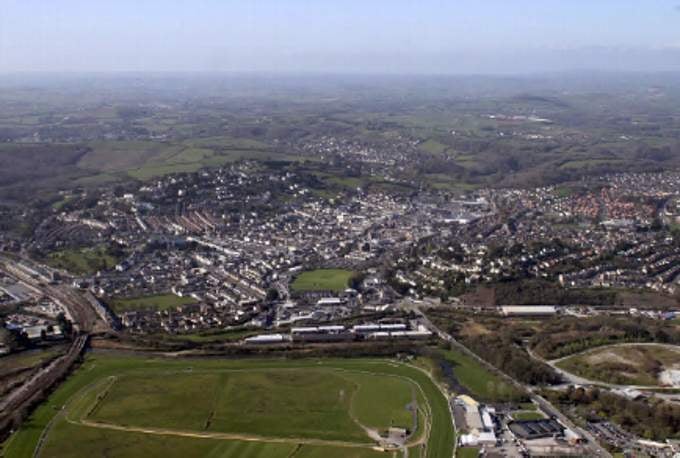
AMBITIOUS proposals are being developed to create ‘garden communities’ across Newton Abbot and Kingsteignton to help shape future development.
The aim is to establish a vision, based on research and feedback from residents, to improve neighbourhoods, the economy, job prospects and lifestyles.
Over the last 18 months, Teignbridge Council has been working with consultants Hilton Bamfield Architects and urban designer David Hawes to carry out research alongside consultation and engagement with residents and technical experts.
Three years ago, Newton Abbot and Kingsteignton was awarded Garden Community status by the Government to help revitalise neighbourhoods and shape significant developments and facilities.

The programme is considered to be ‘vital’ in paving the way to recovery following the Covid pandemic as well as addressing the climate emergency.
The overall vision is to create a ‘future where Newton Abbot and Kingsteignton are carbon neutral, the area has a thriving economy, and is a desirable place to live, work and visit; with beautiful surroundings, a rich culture and diverse natural habitats’.
The programme has divided the two towns into specific neighbourhoods: Newton Abbot town centre, Kingsteignton, Highweek, Hele Park and Houghton Barton, Wolborough and Ogwell.
At a virtual meeting to update on progress, Morgan Wilkinson, community and engagement officer for Teignbridge Council, said the programme was a way to help ‘shape the future’.
She said: ‘The aim is to achieve goals set by the community and create quality spaces people want to live, work, learn and play in.
‘Residents were invited to share their hopes and aspirations.
‘Following this, there were several months of analysis and assessing feedback.’
A series of engagement events took place, mainly online due to Covid restrictions, and the information gathered formed four key themes to guide the process.
Architect James Barnfield explained that the work was to provide a ‘strategic vision with the focus on delivering aims specific to communities’.
He said the process is to develop a framework with aims for each area, looking at their respective and distinct attributes, and ways to deliver those aims.
Mr Hawes explained that the whole process was to create an ‘overarching vision’.
He said: ‘This is not a pie in the sky vision but a way to bring these visions into policy.’
He stressed that the project was in no way seeking to identify or allocate sites for housing development.
The proposals are a ‘framework’ for enhancing the quality of communities, all of which have unique identities but which contribute to the greater area.
The preparatory work looked at transport, new neighbourhoods, construction methods and skills, enterprise and employment, energy, housing and brownfield development, beauty and design, flooding and drainage and enhancing the Bovey Basin.
Having established the main aims, ambitions and vision, the next stage is to look in more detail at the specifics and develop ways to make the visions become reality.
Mr Hawes said: ‘The next steps are to work to create more specific ideas at a strategic level.
‘It is a stepping stone to create a broader expression which can become localised as each community contributes.
‘We can tailor the ideas to each neighbourhood which can then be used in the planning process in the future.
‘Each neighbourhood is distinctive and has a different role to play and purpose.’
NEWTON ABBOT TOWN CENTRE
Major aims for the town centre include improving sustainable travel options, providing facilities and services, diversifying activity, new housing and employment types while ensuring the town is a prominent and connected destination.
The vision is to ‘respond’ to the town’s heritage while making the retail centre more accessible and connected to many facilities.
Mr Hawes explained there should be areas with opportunities to socialise and live in the town centre.
He said: ‘The town centre has to be host to a variety of participants in the future.’
He highlighted the Lemon corridor which could be used to create a more ‘diverse area to bring people and nature together’.
Mr Barnfield added that one aim was the preservation of the town centre heritage including sites such as Tucker’s Maltings and the Mill at Bradley Lane which, he said, ‘deserves to be emphasised’.
KINGSTEIGNTON
Major aims are to provide green streets, improve the public realm, rejuvenate the historic centre, sustain facilities and activities, improve access to existing green spaces and diversify and integrate with Newton Abbot’s retail area.
Mr Hawes said it was important to distinguish between Kingsteignton and Newton Abbot.
He said: ‘Development so far maybe doesn’t respect that view and they may have been considered one area.
‘We need to renew and maintain a sense of being in a distinct community.
‘It needs to distinguish between Kingsteignton and Newton Abbot and vice versa as this has become muddied and indistinct.’
Uses of Newton Road are an important part of ensuring a clear geographic definition between the two towns.
Deliverability is one of the key aims of the plan, working on a ‘patchwork’ of a variety of small projects and making existing green spaces more accessible.
BROADLANDS and BRADLEY VALE
Main aims include linking community spaces in this area while providing access to the river valleys.
Establishing a sustainable heart to the community, improving pedestrian and cycle links and creating travel corridors and removing barriers between communities are among the considerations.
It is suggested that a series of small spaces could be used to improve the street scene.
It is hoped to make people feel part of a more ‘cohesive’ environment.
The area provides a good opportunity to link to the Teign valley and able to ‘unite’ various community uses.
HELE PARK and HOUGHTON BARTON
Main aims for this area are to provide a prominent and mixed use location with ‘hubs’ to join people with nature.
Priorities are to ensure pedestrian and cycle routes, and a relationship with the countryside while creating an ‘active’ travel corridor between Ashburton Road and Bovey Tracey Road.
Seale Hayne campus is a key location which is described as a potentially ‘vibrant destination’.
It is one of the largest areas of Newton Abbot for new housing development and considered to be a space which is a ‘blank sheet’ and available for ‘proactive designs’.
It is considered to be ideal for a mix of uses and with people who may live and work in the Newton Abbot area.
There are opportunities to promote corridors for safer pedestrian and cycle routes.
The changing role of Seale Hayne campus in the past is recognised, from its time as an agricultural college and the site is considered to be a location for employment, education and similar uses.
Mr Hawes said: ‘As a destination, it need to respect its historic location and hope that it can play a significant role in the future.
OGWELL
This area includes the emerging development at Wolborough.
The aim is to enhance the landscape of the village and its features while utilising ‘active travel’ to Newton Abbot town centre.
There is a wish to raise the profile of community activities and improve the public realm.
Among the priorities is better road safety with better traffic calming measures and creating new local ‘centres’ along pedestrian and cycle routes.
More tree planting is encouraged and it is recognised that the landscape is ‘key’.
With the development at Wolborough, the consultants believe there is more scope to provide a green link to the popular Decoy country park which is described as a ‘fantastic community asset’ and a ‘significant’ destination.
Ogwell must be maintained and enhanced, recognising its distinctive importance.
The research highlights the historic importance of St Mary’s Church and the village primary school.
STOVER VALLEY
Aims for this area include improving and promoting education and access to wildlife while protecting the ‘valuable natural asset’.
Better signposting and improved travel routes and uses for recreation are among the suggestions.
Former quarry sites could have new uses including renewable energy.
One of the key features is to emphasise access to the area including through Stover Canal and to the town centre and with better signposting.
The country park is recognised as a ‘valuable natural asset’ with a rich diversity and ‘green corridors’ for wildlife.
BUCKLAND and MILBER
These areas are recognised as having their own distinct attributes with employment, innovation and key engineering roles.
One of the aims is to enhance the features and role of Milber woods while planting more trees to improve the streetscape.
A variety of public realm improvements at key locations are suggested to ‘frame and enhance’ the role of Aller brook which is a natural asset and a way to integrate a route to the town centre.
The landscape is considered to be an opportunity to access nature.