
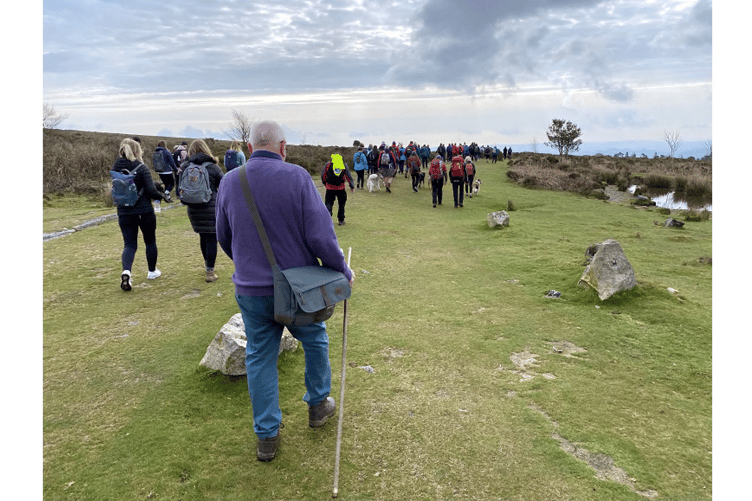
AS a Voluntary Warden with Dartmoor National Park Authority it’s often my good fortune to be walking the open moor, writes Nigel Canham.
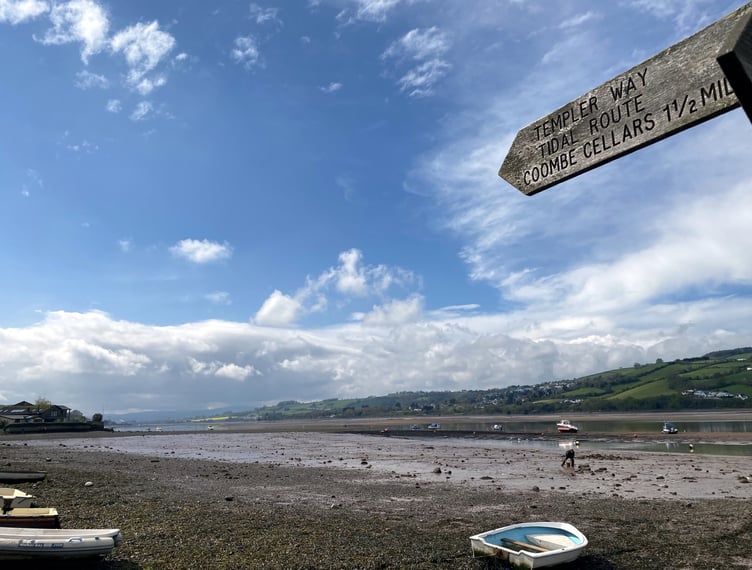
Not so common however is to travel by foot in just a day from the heights of Hay Tor to the mouth of the River Teign.
But that’s exactly what I and hundreds of others did recently when completing the 18-mile Templer Way Challenge in support of Dartmoor Search and Rescue Ashburton Branch.
Not only a great fundraiser for the charity but an opportunity to consider the moor and its relationship with the lowlands beyond.



The tors we know and love are the result of a huge swelling of molten rock some 280 million years ago or more.
The activity then was way below the surface with the Cornubian Batholith, as it’s known, stretching from Dartmoor to the Isles of Scilly.
The six major areas where the granite is now visible, thanks to erosion, include Dartmoor and Bodmin Moor.
The material breaks down over geological time and in Cornwall and on the western side of Dartmoor has left reserves of china clay, or kaolinite, intact and exactly where it was formed.
On the moor’s eastern edge the story is different however. That’s because the kaolinite was washed into the floodplain that today is called the Bovey Basin, a depression caused by the Sticklepath Fault which runs in a diagonal line from the Torbay coast, through Lustleigh and Stickepath and across North Devon.
The kaolinite became mixed with decomposing vegetable matter and is both rarer and much more valuable than china clay because it has greater ‘plastic’ qualities, so can be moulded into intricate shapes - think toilet pans.
It’s called ball clay simply because the early hand-cut cubes became rounded as they were handled, ending up ball-shaped.
The first serious commercial exploitation of this highly prized material began in the 17th century and quickly ramped up as demand grew, largely thanks to the craze for tobacco and the pipes in which it was smoked.
Indeed, so sought after was it that an export ban imposed during the reign of King Charles II wasn’t lifted until the middle of the 1800s, and another was introduced during the Second World War.
Today the industry remains active with the landscape from Bovey Tracey to Kingsteignton and Newton Abbot changed forever.
Only a few years ago the B3193 was moved in a £10 million project to expose ball clay reserves hidden under the old road and one of Newton Abbot’s most popular parks, Decoy, was a working quarry until the 1960s.
It had been operated by the Devon and Courtenay Clay Company whose abbreviated title, some suggest, gave us the ‘Decoy’ name.
And of course, the Templer Way follows the route of both the granite railroad, constructed in 1820 to ease the transport of granite quarried at Hay Tor, and the Stover Canal which carried both ball clay and granite.
It’s a great walk and ends in Teignmouth where ball clay products remain a major export from the docks.
► Check out the details here, but remember only to walk the estuary section when the tide permits.
Comments
This article has no comments yet. Be the first to leave a comment.