
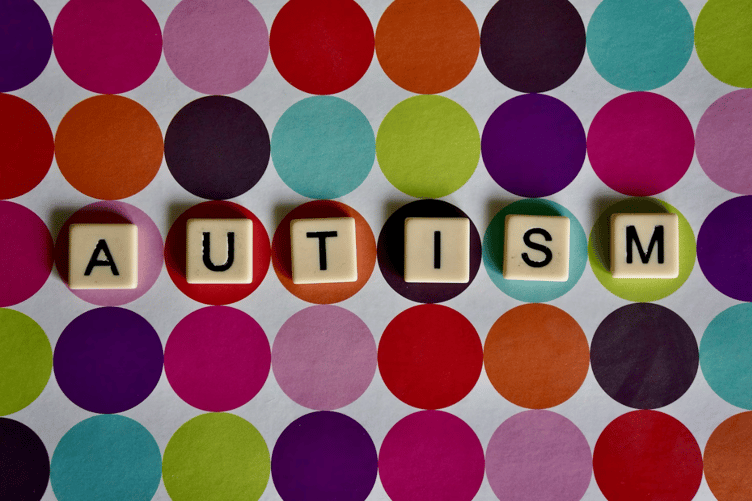
A NEW trial led by a Devon university could significantly benefit autistic children and their families and the care provided across the entire UK healthcare system.
Autism is thought to affect about 2% of the UK population, with the most recent estimates suggesting that diagnostic and support costs total in excess of £32billion per year.
Despite this, autism care and support in the UK is seen and experienced by many as at best disjointed, more often non-existent. Autism is experienced by entire family units, yet many existing healthcare systems do not take wider effects on the whole family into account.
A major new trial, led by the University of Plymouth and funded through a grant of more than £2.8million from the National Institute for Health and Care Research (NIHR), aims to help address that.


It will examine whether a specially developed package of support – SAFE: Systemic Autism-related Family Enabling – can significantly improve the mental health, wellbeing, and functioning of all family members, and give them coping mechanisms that build their capability to manage some of the challenges that often surround or accompany a diagnosis of autism.
AFE is a package of support for autistic children and their families. It has been coproduced and developed over more than a decade, with nearly 100 families as experts by experience, and leaders in education and psychology from the University of Plymouth.
It is delivered by trained family therapists through a flexible toolkit of activities that can be used with, and by families, depending on their needs.
The four-year SAFE2 project draws together partners including the voluntary and community sector and those working at universities and healthcare organisations, in addition to almost 500 families across the UK.
The interventions SAFE will trial have already been developed and tested through a feasibility study and other research and community-based initiatives, funded by NIHR and Autistica, and the new project will be the largest yet to explore its potential benefits for families.
It will also explore how SAFE might be applied right across the NHS, so it benefits autistic children and their families every day and the clinicians and practitioners working to improve the process of autism diagnosis and the provision of follow-up care packages.
The new trial will be managed by the Peninsula Clinical Trials Unit (PenCTU), also based at the University of Plymouth, and will recruit almost 500 families of autistic children from six sites across England.
From these families, more than 320 will be chosen at random to receive SAFE as well as the usual care that would be offered by the NHS or their local authority.
The other families will only receive usual care.
Those families assigned to receive the SAFE intervention will be invited to attend a total of 13 sessions.
This will include two three-hour sessions for parents in a group with other parents of autistic children, and five two-hour individual family sessions for the whole family, as well as other focus group sessions.
The ‘whole family’ sessions will consist of the autistic child and parents as a minimum, plus other central family members, such as siblings, grandparents, stepparents, other family, or even close friends.
All the participants will be asked to complete questionnaires before and after SAFE or usual care, and then a final questionnaire a year after being chosen at random.
The researchers will use the answers provided to measure changes in communication, coping with difficulties, family strengths and wellbeing, and families will also be invited to talk in groups about taking part in the study.
Comments
We've recently changed our login process. If you have an account for commenting, you will need to re-register on the login window.
This article has no comments yet. Be the first to leave a comment.