

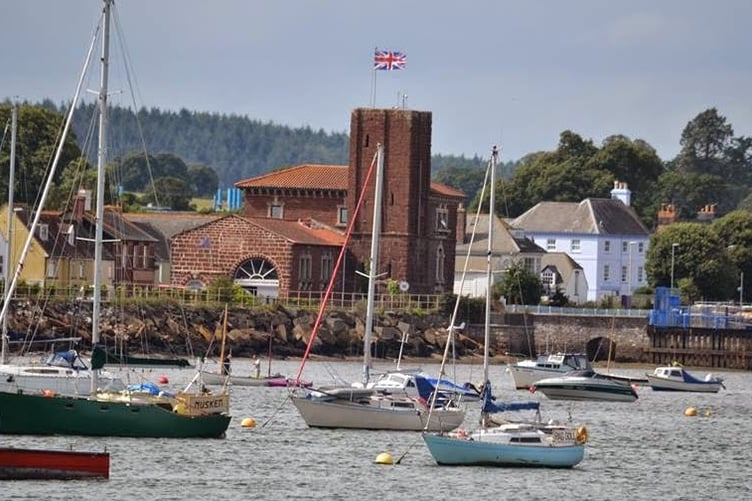
A BID to save a vulnerable historic landmark in Starcross has been given the green light.
Teignbridge Council has approved a scheme to conserve the Grade I listed Brunel Tower which has been on Historic England’s at Risk Register for two years.
Designed by Isambard Kingdom Brunel in 1845 for the South Devon Atmospheric Railway, the pumping house tower is currently used as a clubhouse and boat store by its owners Starcross Fishing and Cruising Club.
Supported by Historic England, the club’s plans to repair and restore the building have been given Listed Building consent.




Historic England has welcomed the approval.
A spokesman said: ‘HE has formally supported plans to repair Brunel’s Pumping House at Starcross, a building at risk.
‘It was placed on the Heritage at Risk Register in 2024 due to its declining condition and water getting into the building.
‘The application is for exterior repairs and reversing some inappropriate later works that have had a negative effect on this special building.
‘These include the replacement of the capping to the tower and the repointing of open joints.
‘HE has worked with the Starcross Fishing and Cruising Club on their carefully designed proposals to improve the condition of Brunel’s Pumping House and restore its architectural character, and supports the approach the club is taking to repair this much-loved landmark.’
A planning statement said the main purpose is to provide a ‘maintenance strategy’ for the conservation and repair of the exterior stonework, which is constructed from a red conglomerate stone known as Heavitree breccia, the condition of which is giving cause for concern.
The plans also address some changes which are ‘directed at enhancing the heritage asset, by resolving weathering details that affect the rate of deterioration of the fabric, and by reversing or mitigating detrimental past changes to the building’.
Completed in 1846, the pumping station, which is also known as ‘The Brunel Building’, was designed by engineer Brunel for the South Devon Railway (SDR), then under construction to link Exeter and Plymouth.
It housed stationary steam engines used to power trains by means of a vacuum pipe laid along the railway.
The innovation used an ultimately unsuccessful technology known as ‘atmospheric propulsion’ adopted by some railway companies of the time.
The atmospheric system proved problematic and was abandoned by the SDR in 1848 in favour of conventional steam locomotive haulage.
Since then, the building has seen numerous changes of use and alterations.
Currently, its condition has been of concern due to a backlog of maintenance problems including water ingress through walls, and degradation of stonework.
But the recent approval means repairs can go ahead.
This includes repairs and alterations to the building’s exterior including repointing and crack repairs, repairs to the Heavitree stone walling and repairs to limestone dressings.
There will be new weatherings and flaunchings, a new parapet coping to the chimney tower, replacement of guttering and windows and doors and removal of other ‘detracting features’.
Comments
We've recently changed our login process. If you have an account for commenting, you will need to re-register on the login window.
This article has no comments yet. Be the first to leave a comment.