

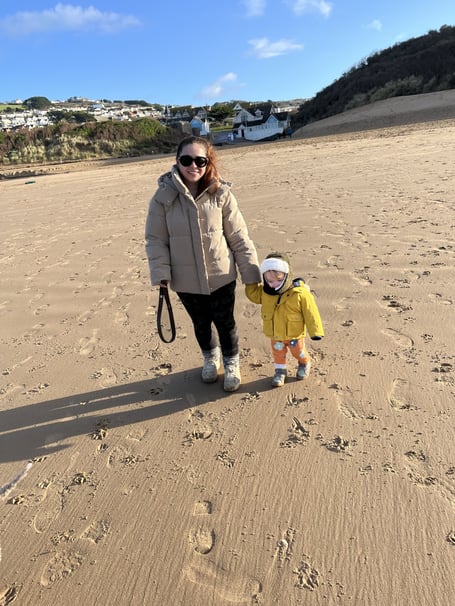
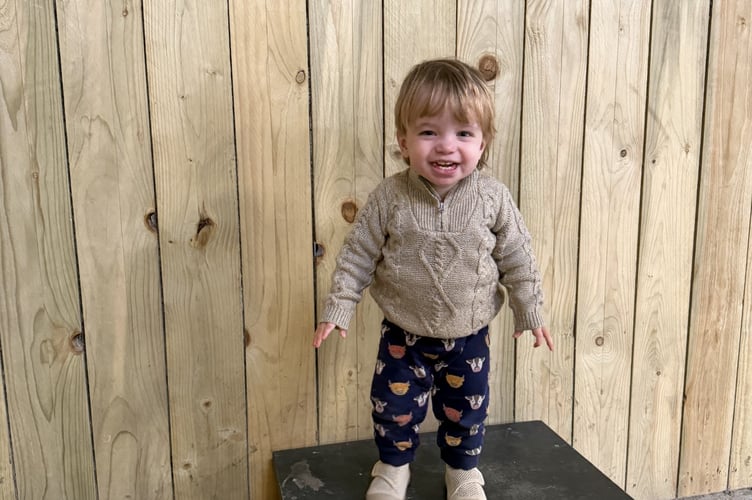
A TODDLER from Newton Abbot has been diagnosed with a rare genetic condition which affects his growth.
Elijah Pinto, who is 23-months-old, has SHOX (Short Stature Homeobox) caused by a missing or non working gene which plays an important role in bone growth, particularly in the limbs.
His mum Matilda Flain also has the condition but was only diagnosed herself this year while doctors investigated why Elijah was not growing as he should.


Matilda explained: ‘Early diagnosis is very important for SHOX as the sooner treatment is started the better growth outcomes.
‘I was treated at Torbay Hospital as a child due to restrictive growth but the condition was not widely known about and I was not diagnosed at the time.
‘Unfortunately I can not have treatment now as growth plates have closed.
‘I’m only 4”9 which is the main symptom I have of the condition. I also have back pain which can be another issue with SHOX.
‘I am sharing a deeply personal story that I hope will help raise awareness of this condition which often goes unrecognised for years.’
Following Elijah’s diagnosis, the condition is so rare, he will be the first child with it to be treated at Torbay Hospital.
To raise awareness of the condition, his dad Joshua Pinto will be running a half marathon.
Matilda explained: ‘This journey has been both emotional and eye-opening.
‘Like many families, we had never heard of SHOX deficiency before, and getting answers has taken time, persistence, and support from medical professionals.
‘As a family, we have decided to turn this experience into something positive.
‘We are currently raising money and awareness by taking part in the London Half Marathon, hoping to support further research and help other families affected by the condition.
‘As my son begins treatment locally, it will mark an important step forward—not just for our family, but for others who may be going through similar uncertainty without yet having a diagnosis.
‘By sharing our story, I hope to raise awareness of SHOX deficiency, encourage earlier diagnosis, and let other parents know they are not alone.
‘Access to research, support, and better awareness can make a huge difference to families like ours who are navigating the medical, emotional, and practical challenges that come with growth disorders.’
Diagnosis typically involves monitoring growth patterns, imaging such as X-rays, and genetic testing, while treatment may include growth hormone therapy to improve height and orthopedic care to manage skeletal issues.
Joshua will be running the Royal Parks Half Marathon in October.
To support him, go to https://www.justgiving.com/page/matilda-flain-1?newPage=true
Donations will go to the charity the Child Growth Foundation which supports children, adults and families affected by rare growth conditions.
It also funds research into greater understanding and management of these conditions and raises awareness and understanding of growth conditions, to improve their detection and support earlier diagnosis.
Comments
This article has no comments yet. Be the first to leave a comment.