
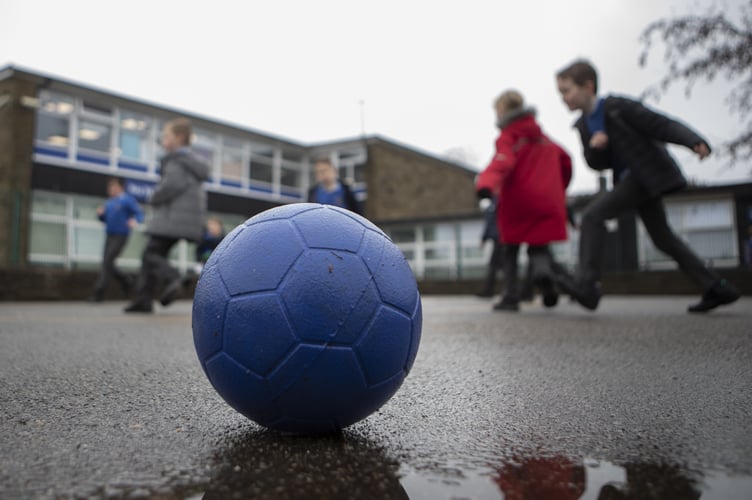
Half of children in Teignbridge were not meeting the expected levels of physical activity last year, new figures show.
Sport England said "stark inequalities" are excluding the poorest in society from participation and called for a "renewed national effort" to boost access to sport.
The organisation's annual Active Lives survey, which was completed by more than 130,000 school-age children across England in the 2024-25 academic year, shows 49% (3.6 million) are getting at least 60 minutes of physical activity every day, the target set by England's chief medical officer.
This marked a 2% increase on the year before, and the highest total since 2017-18, when the survey began.
In Teignbridge 49% reached this level, a rise on the 41% a year earlier, and a rise on the 41% in 2017-18.
Simon Hayes, chief executive of Sport England, said the "encouraging" findings reflected "the positive impact that schools, clubs, community organisations, and many others are having across the country".
However, he added: "But the report also makes clear how much more we must do.
"It cannot be right that fewer than half of children are moving as much as recommended, and that stark inequalities mean too many amongst the poorest in our society miss out. We need a renewed national effort to change this.
"At Sport England we remain committed to working with all our partners to ensure that every child in England can enjoy the physical, social and mental benefits of an active life, wherever they live and whatever their background."
In Teignbridge, 19% of children were 'fairly active', getting between 30 and 60 minutes of activity a day, and 32% were 'less active', with fewer than 30 minutes.



Chris Boardman, active travel commissioner and Sport England chair, said: "It’s fantastic to see more children walking, cycling and scooting to the places they need to go.
"Active travel isn’t just a way of getting around. It’s the foundation for healthier, more confident and more independent young people.
"The fact that 1.2 million more children are travelling actively than seven years ago shows a real cultural shift beginning to take hold. After the disruption of the pandemic, this upward trend is especially encouraging.
"But this is also a reminder of what’s possible when we create streets, routes and communities where safe, everyday movement is the easy choice.
"If we create people-friendly places and give families real alternatives to the car, we can help an entire generation build active habits that last a lifetime."
The figures also show how participation in sport and physical activity varies across different groups.
Nationally, black (41%) and Asian (43%) children, and those from the least affluent families (45%), are still less likely to play sport or be physically active than the average across all ethnicities and affluence groups, and girls (46%) are also less likely to be active than boys (52%).
Sports minister Stephanie Peacock said: "Today's growth in activity levels is positive, and a real credit to the hard work of teachers, coaches, volunteers and parents who inspire young people to get moving every single day.
"But we know there is more to do. Too many children still miss out on the joy and benefits of sport.
"That is why we are investing £400 million in grassroots sports facilities where they are needed most and launching a new PE and School Sport Partnerships model to ensure that every child, no matter where they live or whatever their background, gets the same opportunities to be active."