

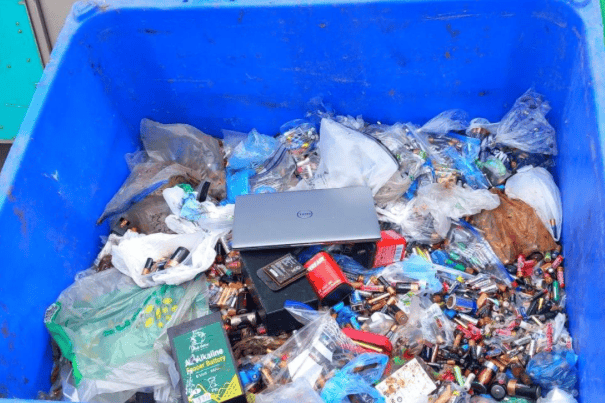
DEVON’S fire service are urging residents not to dispose of items containing lithium-ion batteries in their general waste.
The warning by Devon and Somerset Fire and Rescue Service (DSFRS) comes following a rise in fires at waste depots and waste collection vehicles linked to damaged batteries.
Lithium-ion batteries are found in everyday items such as vapes, mobile phones, laptops, e-scooters, e-bikes and children’s toys.
When thrown away in general waste, they can be crushed or punctured during collection.




This damage can cause short-circuiting and overheating, triggering thermal runaway - a chain reaction that releases energy uncontrollably and can result in intense, fast-spreading fires.
Battery fires have been recorded inside waste collection vehicles and at recycling and waste centres, posing significant risks and disrupting essential services.
Kate Saint, Head of Prevention at DSFRS, said: ‘Lithium-ion batteries power many everyday items and, when used correctly, they are safe.
‘But if crushed or damaged, they can ignite without warning.
‘These fires spread quickly, are difficult to extinguish and can even reignite after appearing to go out.
‘Separating electrical items and batteries may feel like extra work, but safe disposal greatly reduces the risk of fires and protects waste management and emergency teams’.
The fire service are reminding residents to: never place loose batteries or electrical items in general waste bins; use designated battery recycling points, often available in supermarkets; take unwanted electrical items to local recycling centres and follow local council guidance on small electrical collections where available.
Most lithium-ion batteries are found in items that are rechargeable, charged via a USB cable or plug, and designed to be used without being permanently connected to a power source.
For more information on how to recycle lithium-ion batteries, visit your local council’s website.
Comments
This article has no comments yet. Be the first to leave a comment.